The Best Secure Code Review Providers in 2026 to Prevent Breaches and Logic Flaws
Traditional QA and functional testing focus on expected behavior, leaving critical logic flaws, insecure design patterns, and hidden vulnerabilities undetected until production. In this guide, we evaluate the top secure code review service providers. This comparison will help you choose the right partner to strengthen your software security posture
Software vulnerabilities are a leading cause of breaches, outages, and compliance failures. In modern development pipelines, traditional functional and QA testing covers only intended behaviors and rarely detects logic bypasses, insecure design, or systemic weaknesses. By the time these issues surface in production, they can be costly to remediate and expose critical systems to attackers.
Thankfully, secure code review addresses this gap. Unlike black-box testing, secure code review is a “white box” analysis used to uncover flaws before they are compiled and deployed. It is a proactive, in-depth security assessment in which testers have full access to an application’s source code, architecture, and credentials. Testers identify vulnerabilities, such as logic flaws and misconfigurations, by analyzing the software's internal workings rather than just simulating external attacks.
With shorter shipping cycles, more AI-generated pull requests, and increasing compliance demands, teams need a more robust approach to secure code review. The most effective strategy in 2026 is a hybrid model that combines:
- Automated, repo-native scanning to quickly detect common vulnerabilities at scale
- Manual, expert review to analyze complex logic, context, and potential exploit chains
- Audit-ready reporting to support compliance frameworks such as ISO 27001, SOC 2, and OWASP ASVS
This combination ensures both high-volume technical issues and high-risk logic vulnerabilities are caught early, improving security posture without slowing engineering velocity.
The guide below evaluates the top 9 secure code review providers, highlighting what differentiates them in terms of methodology, coverage, and engineering impact. While our research aimed for 10, high-quality secure code reviews require deep expertise, and not all vendors meet the standards needed for thorough, production-safe results.
Why Trust Us?
Software Secured has spent over a decade in the trenches of cybersecurity. The team is dedicated to delivering bank-grade security to fast-growing software companies and has conducted over 2000 pentests in the last few years, helping companies stay compliant and secure; we even have the grey hair to prove it:
“The experience validated how we think about security during development. We now have confidence that the purposeful adoption of AI in our workflows has not impacted our ability to ship secure code.” - Brian Reeve - Principal Engineer, Perusall.
Why Secure Code Review Matters in 2026
We know that waiting to fix vulnerabilities post-deployment will cost you substantially more than remediating vulnerabilities ahead of time.
.avif)
Shipping velocity and AI-generated PRs have increased review workloads, and automated tools alone cannot catch everything. This is why we advocate for a hybrid approach to provide:
- Broad scanning & initial identification – Automated tools like SAST and SCA scan large codebases to detect common vulnerabilities, misconfigurations, and technical flaws.
- Detection of complex logic flaws – Human experts catch business logic errors, unintended behaviors, and zero-day vulnerabilities that automated tools may miss.
- Increased accuracy & reduced false positives – Manual validation filters irrelevant findings and provides nuanced insight.
- Comprehensive coverage & risk prioritization – Experts contextualize vulnerabilities and advise on remediation for authentication, API security, cryptography, and more.
- Integration with standards – Aligns with OWASP Secure Coding Guidelines and other global security best practices.
How the Services Were Selected
Our evaluation prioritized human-led secure code review, as automated tools alone often miss exploitable logic flaws, insecure patterns, and context-specific vulnerabilities. Vendors were assessed against the following criteria:
- The proportion of human review used (tools alone miss exploitable flaws)
- Integration with software development tools (CI/CD, Bug Tracking Systems, GRC tools)
- Coverage for multiple programming languages ( C, C++, Java, C#, TypeScript, JavaScript etc)
- Support for compliance and audit evidence
These recommendations are particularly suitable for DevSecOps programs, AI-assisted development environments, and teams seeking to reduce production risk through thorough, expert-led analysis. By prioritizing human-led review, organizations can detect high-risk issues early, improve remediation accuracy, and maintain confidence in their software security posture.
This is the hybrid advantage.
The Top 9 Secure Code Review Service Providers in 2026
1. Software Secured
What it is: Hybrid secure code review combining automated static analysis with deep manual inspection of high‑risk modules and business logic.
Why we like it: Delivers developer‑ready remediation guidance, prioritizes logic bugs that scanners miss, and integrates context into CI/CD workflows.
Pros:
- Deep manual analysis of critical areas such as authentication, authorization, cryptography, business logic, and trust boundaries.
- Integration with engineering workflows (JIRA, Slack, Azure DevOps) makes remediation actionable.
- Broad language support covering mainstream enterprise stacks plus scripting languages.
- Actionable, prioritized reports with CVSS/DREAD scoring and reproduction steps.
Cons:
- The cost is higher than that of basic automated scans due to the time experts spend and the quality of the output.
Best for: Mature engineering teams that need human validation, logic‑aware findings, and remediation guidance beyond static scanners.security experts reviewing code and infrastructure
Starting Price: $9,300 USD
2. Cobalt
What it is: Application security platform with human‑led secure code review leveraging global vetted experts and OWASP‑based methodology.
Why we like it: Strong validation of automated findings through expert review and collaborative workflow tools.
Pros:
- Flexible engagement models, including on‑demand expert review.
- Backed by a global network of seasoned consultants with diverse codebase exposure.
- Encourages real‑time dev collaboration during review.
Cons:
- Not as repo‑native as some platforms, so deep CI/CD and automated gating may require tooling customization.
- Engagements are often project‑based, suitable for snapshot reviews rather than ongoing, integrated checks.
Best for: Teams that want expert validation of scanner output and occasional deep manual reviews.
Pricing: Custom pricing
3. Cyberglobal
What it is: End‑to‑end secure code review and application security assessment combining scanning tools with manual analysis.
Why we like it: A balanced approach to automated code scanning for scale, with human inspection of sensitive areas.
Pros:
- Methodology covering authentication, data validation, API security, and encryption.
- Human reviewers focus on logic and context issues that tools miss.
- Experience with complex systems and large codebases through broad client exposure.
Cons:
- Automated tooling is part of the process, so teams may still see significant noise before human validation.
- Less emphasis on deeply integrated development toolchain workflows.
Best for: Organizations seeking traditional consulting‑style deep AWS, web, and enterprise codebase audits.
Pricing: Request a quote
4. Vumetric
What it is: A security firm combining automated scanning with manual inspection aligned to industry standards.
Why we like it: Focus on regulatory alignment and actionable developer guidance based on best practices.
Pros:
- Strong emphasis on comprehensive assessment of authentication, injection points, and third‑party libraries.
- Reports include risk profiles, executive summaries, and mitigation steps.
- Supports mobile and client/server reviews.
Cons:
- The process is more consulting‑oriented and may be less seamless for engineering integration.
- Manual review timeframes and scheduling may be longer than those for platform‑centric services.
Best for: Companies that value standards alignment and structured security reporting as part of risk governance.
Pricing: Contact for details
5. Wattlecorp
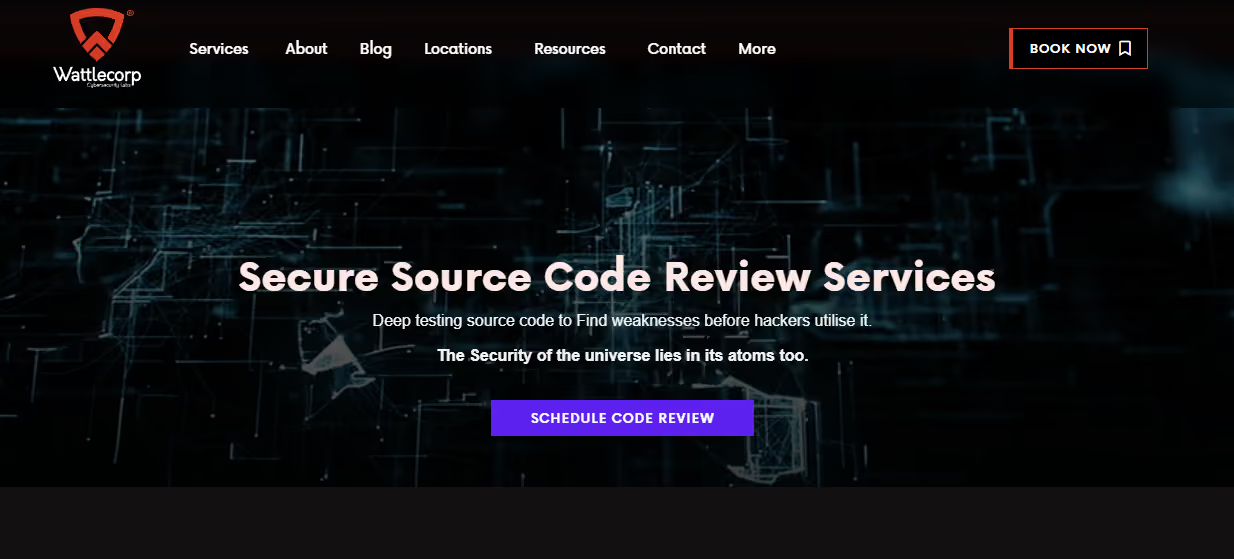
What it is: Secure source code review service combining manual expert analysis with supportive automation.
Why we like it: Emphasis on manual review, backed by tools to minimize false positives, and a focus on logic/architectural issues.
Pros:
- Human analysis emphasizes logic flaws, authorization weaknesses, insecure coding idioms, and cryptographic oversights.
- A manual + automated approach means greater confidence in findings and more meaningful action plans.
- Flexible process stages enable scoped reviews focused on business priorities.
Cons:
- Automation support appears supplemental rather than deeply integrated into developer pipelines.
- Report detail level and tooling feedback loops may vary by engagement.
Best for: Teams looking for expert manual review with complementary automation, especially in regulated environments.
Pricing: Custom
6. Fluid attacks
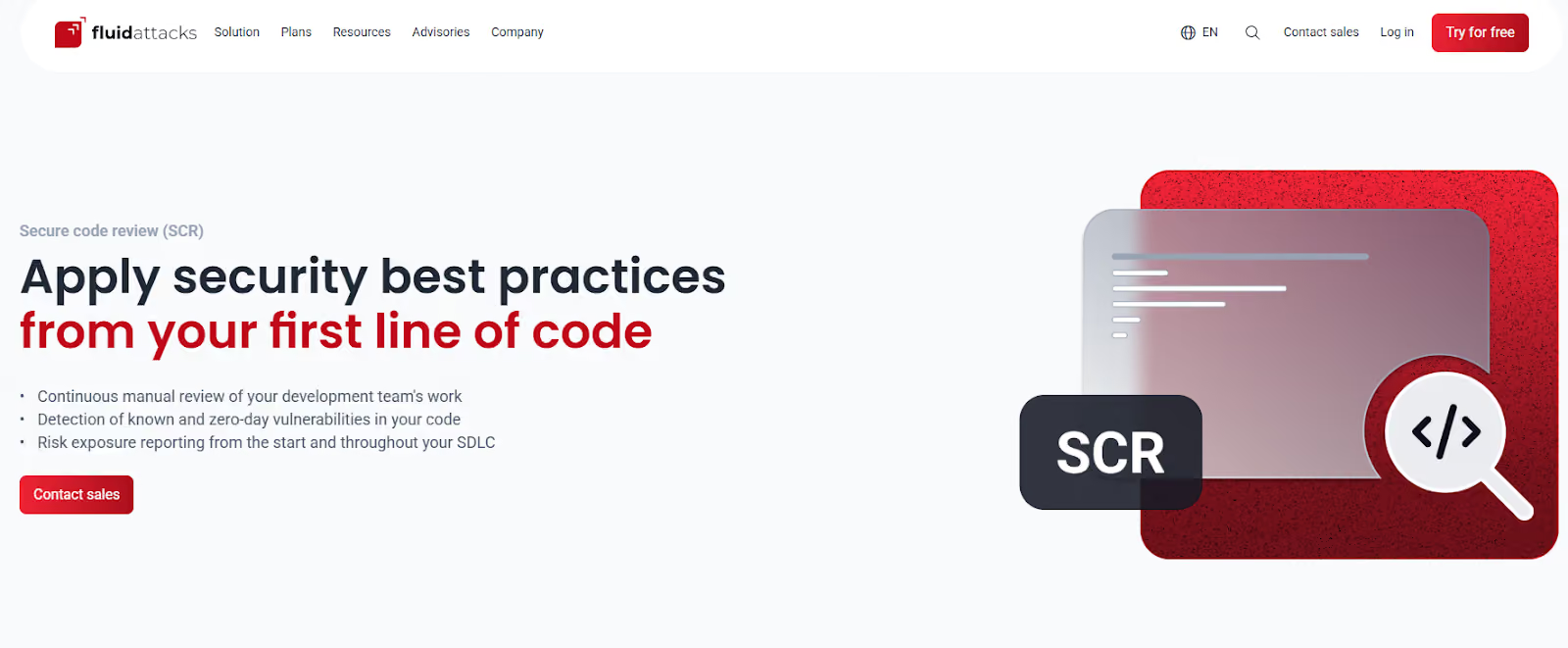
What it is: Secure code review combining SAST, SCA, and manual pentester validation.
Why we like it: Broad language support and CI gate integration with developer IDE extensions for fast remediation.
Pros:
- Wide language coverage (C, C#, C++, Java, JS, Python, Ruby, Swift).
- Continuous integration tooling can break builds on policy violations to enforce security gates.
- IDE extensions and contextual guidance speed developer fixes.
Cons:
- Manual review supplemented by automation may lead to longer turnaround times for large portfolios.
- A continuous testing model may require workflow changes for engineering teams.
Best for: Teams seeking to integrate shift‑left security directly into development workflows.
Pricing: Contact for a quote
7. Certus Cybersecurity
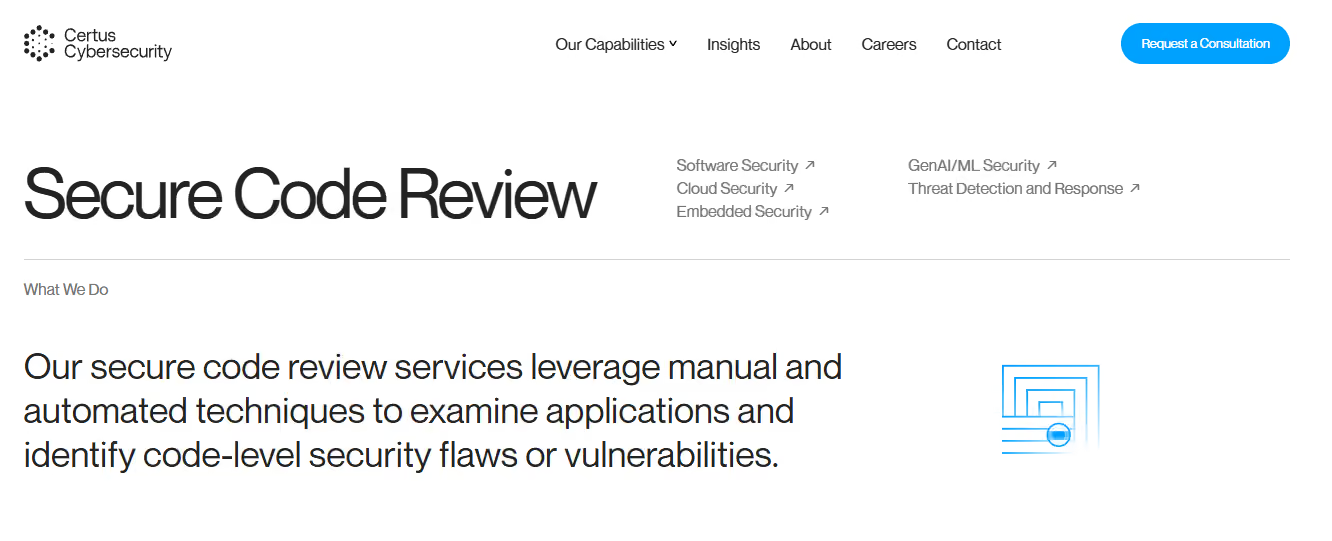
What it is: Consulting firm offering secure code review as part of broader application and product security services.
Why we like it: Strong manual, risk‑based evaluation suited to complex systems and regulated industries.
Pros:
- Skilled in deep manual code analysis and logic vulnerability discovery.
- Supports multiple languages and environments, including firmware and device code.
- Good for high‑risk business contexts with complex design and compliance needs.
Cons:
- Less emphasis on repo‑native integration or continuous review tooling.
- It may feel more like legacy consulting than a modern, developer‑centric security workflow.
Best for: Organizations that need deep risk assessments beyond simple code scanning.
Pricing: Custom
8. Ziwit

What it is: European cybersecurity firm whose white‑box pentesting approach includes source code analysis as part of broader security audits.
Why we like it: Certified auditors perform comprehensive assessments that include code, configuration, and environment checks.
Pros:
- Experienced team with PASSI/ANSSI certification for offensive security.
- Reports include detailed remediation advice and prioritization.
- Offers complementary services, such as training and pentest-as-a-service, to support an ongoing security posture.
Cons:
- Secure coding review is part of white‑box pentesting, not a dedicated code review product.
- May include broader attack-surface work (network, API) that dilutes the pure code focus.
Best for: Organizations that want code review embedded in a full offensive security audit.
Pricing: Contact for a quote
9. Bureau Veritas Cybersecurity
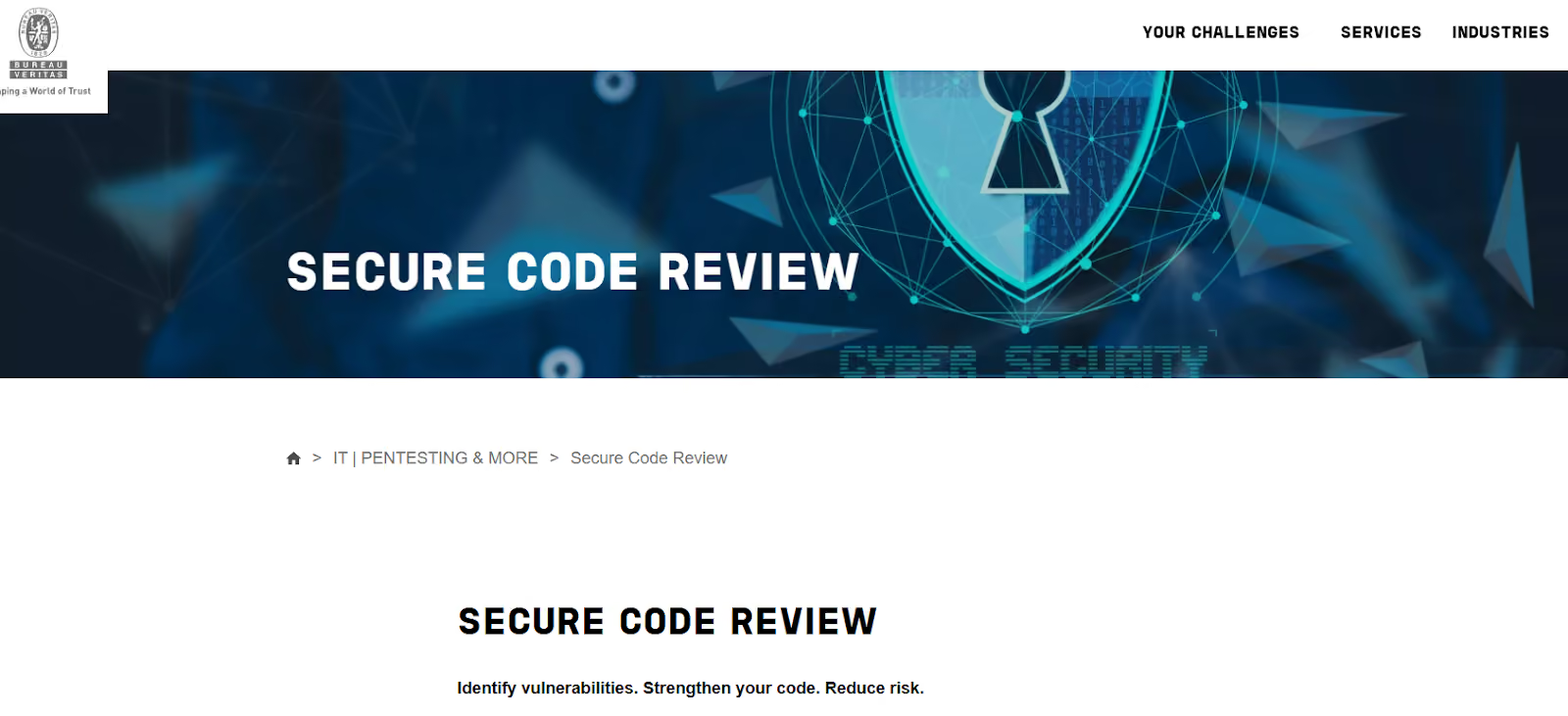
What it is: Global cybersecurity services provider offering secure code review as one component of broader compliance, testing, and assessment portfolios.
Why we like it: Provides manual source code analysis combined with broader assurance services (architecture, SDLC, compliance frameworks).
Pros:
- Part of a global security practice, offering cross‑domain expertise beyond code.
- Manual review uncovers vulnerabilities scanners tend to miss.
- Good for teams needing integrated compliance evidence (ISO, SOC 2).
Cons:
- Less emphasis on CI/CD native tooling or modern developer workflow automation.
- Service scope broader than code review alone, which can dilute focus for pure DevSecOps needs.
Best for: Organizations that want expert‑driven code analysis as part of wider security assessments and compliance programs.
Pricing: Contact for a quote
How to Choose the Right Secure Code Review Approach
Not all secure code reviews are created equal. Picking the right approach means balancing speed, coverage, and risk reduction, while keeping your engineering team productive. Here’s what you should consider:
1. Automated vs. Manual Balance
- Automated tools (SAST, SCA) are fast and scalable, catching common vulnerabilities across large codebases.
- Manual expert review identifies complex logic flaws, subtle misconfigurations, and context-specific risks that automation misses.
- Hybrid is best: use automation for breadth and humans for depth.
2. Integration with Your Development Workflow
- Reviews should fit naturally into CI/CD pipelines, pull request workflows, and bug-tracking systems.
- Seamless integration reduces friction, ensures faster remediation, and keeps velocity high.
3. Coverage Across Languages and Frameworks
- Your provider should support your tech stack. From backend languages like Java, C++, and C# to frontend frameworks and scripting languages.
- Deep coverage ensures high-risk modules aren’t overlooked.
4. Alignment with Compliance and Standards
- Secure code review isn’t just about bugs. It’s also about meeting standards like OWASP, ISO 27001, SOC 2, and internal governance.
- Audit-ready reporting can save time and reduce regulatory risk.
5. Actionable, Contextual Results
- Raw vulnerability lists are useless if your engineers can’t act on them.
- Look for providers who deliver prioritized, step-by-step remediation guidance with clear risk context.
Bottom line: The right approach incorporates human insight and workflow integration. It’s about catching the right issues early and enabling your team to ship secure, high-quality software confidently.
Software Secured is the go-to secure code review provider in 2026
In 2026, shipping fast doesn’t have to mean shipping vulnerable. Automated tools alone miss subtle logic flaws, AI-generated PR risks, and hidden design weaknesses. Software Secured combines human expertise with modern techniques to deliver secure code review that catches what machines can’t.
For IT leaders, the benefits are immediate: earlier detection reduces costly remediation, protects your users, and preserves your product and reputation. Software Secured expert-led reviews provide actionable guidance, align with compliance standards, and integrate seamlessly into your development workflow. This frees engineering teams to focus on innovation rather than firefighting security incidents.
Choosing Software Secured is a strategic move. With context-aware analysis, deep security expertise, and hands-on support, you will gain confidence that your code is resilient, your releases are safe, and your business can scale without compromise.
With the right partner, security becomes a competitive advantage, and in 2026, that partner is Software Secured.
Ready to get in touch? Get started by booking a consultation now.
About the author

Kaycie Waldman
Demand Generation Manager
Kaycie Waldman works closely with SaaS, cloud, and technology organizations on security, risk, and compliance initiatives that support growth and enterprise readiness. Her work spans strategic content, go-to-market initiatives, and customer trust programs designed to support scale, compliance, and enterprise sales.


.avif)