10 Healthcare Cybersecurity Best Practices to Prevent Breaches
Healthcare organizations face unique cybersecurity risks, from sensitive patient data and legacy systems to ransomware and third-party vendor access. This guide covers 10 healthcare cybersecurity best practices to help organizations strengthen security, validate their controls, and reduce real-world attack risk.
Healthcare organizations house some of the most complex IT environments in any industry. They are designed to manage and run electronic health records, medical devices, billing systems, cloud platforms, and third-party vendor connections. Unfortunately, problems arise frequently when dealing with systems that were never intended to be secure. When those frameworks fail, their consequences extend beyond data exposure to care delivery and organizational trust.
This guide covers healthcare cybersecurity best practices that address real-world attack paths, not just compliance checkboxes.
What Is Healthcare Cybersecurity
Healthcare cybersecurity protects patient data, clinical systems, applications, and connected devices while ensuring users' safety from unauthorized access, disruption, and data theft.
Patient Data Protection
Healthcare systems handle PHI and ePHI across EHR platforms, billing records, clinical workflows, lab systems, and telehealth applications. All of it falls under HIPAA's Security Rule, which establishes administrative, physical, and technical safeguards for ePHI.
Security and Compliance
Compliance only establishes a documented baseline. It does not prove that controls are implemented correctly or that configurations match the policies. An organization can pass a HIPAA audit and still have exposed APIs, misconfigured cloud storage, or privileged accounts without MFA.
This is the same gap that led to the 2024 Change Healthcare breach: the organization was HIPAA-covered, but an internet-facing Citrix portal without MFA gave ransomware operators a direct path into the network, disrupting care and payments nationwide for weeks.
Why Healthcare Organizations Face Higher Cyber Risk
Healthcare organizations are frequent targets for attackers because they store irreplaceable patient data and cannot tolerate significant downtime. According to IBM's 2024 Cost of a Data Breach report, the average cost of a healthcare data breach was $9.77 million, the highest among industries for 14 consecutive years.
Sensitive Patient Data
PHI has lasting value because it cannot be changed after compromise. Attackers understand this, which is why healthcare records command a significant premium over financial credentials in the volatile cybercrime market.
Clinical Uptime Needs
When EHR access is locked by ransomware, employees are forced to use manual workflows, procedures are delayed, and ambulances may be diverted to nearby facilities. The directly targeted organization is often not the only one affected operationally.
Legacy Technology
Vendors no longer patch systems commonly used in healthcare environments. Structural risks arise when systems are integrated into clinical workflows; compensating controls can mitigate them but not eliminate them.
Vendor Dependencies
Most healthcare organizations depend on dozens of business associates and SaaS platforms that access PHI. A compromise of a billing processor or scheduling vendor can expose patient records without any failure in the healthcare organization's own infrastructure.
10 Healthcare Cybersecurity Best Practices
Effective healthcare cybersecurity is a continuous program aligned with NIST Cybersecurity Framework guidance, HHS 405(d) Health Industry Cybersecurity Practices, and CISA's Known Exploited Vulnerabilities Catalog.
Risk Assessments
A formal risk assessment maps assets, data flows, and access paths to easily identify gaps where controls are missing or inadequate. HIPAA requires periodic risk analysis under §164.308(a)(1). In practice, these assessments deliver the most value when they're updated after significant changes rather than only on a fixed annual schedule.
Access Controls
Least privilege, RBAC, privileged access reviews, and fast offboarding matter more in healthcare than in most industries, as clinical staff rotates across departments, locum and travel clinicians need temporary EHR access, and administrative turnover is high. Reviewing access on a regular cadence and revoking it the moment a role changes limits how long an orphaned or compromised account stays exploitable.
Multi-Factor Authentication
MFA should cover EHR platforms, VPNs, cloud systems, emails, admin accounts, and all remote access paths. Missing MFA has been the specific failure point in some of the largest healthcare breaches on record: the 2024 Change Healthcare attack, traced back to a Citrix portal without MFA, and the 2022 Medibank breach, traced back to a VPN without MFA.
Security Awareness Training
The most common entry points for cybercriminals into healthcare systems are phishing and social engineering. Training programs should address recognizing phishing, handling PHI, and reporting suspicious activity. Instead of measuring training completion rates, simulated exercises aim to gauge real behavior.
Endpoint Protection
EDR tools detect malicious activity on workstations, servers, and mobile devices. Hardening devices (by blocking unused ports, forcing secure configurations, and managing endpoints through MDM) reduces the attack surface.
Network Segmentation
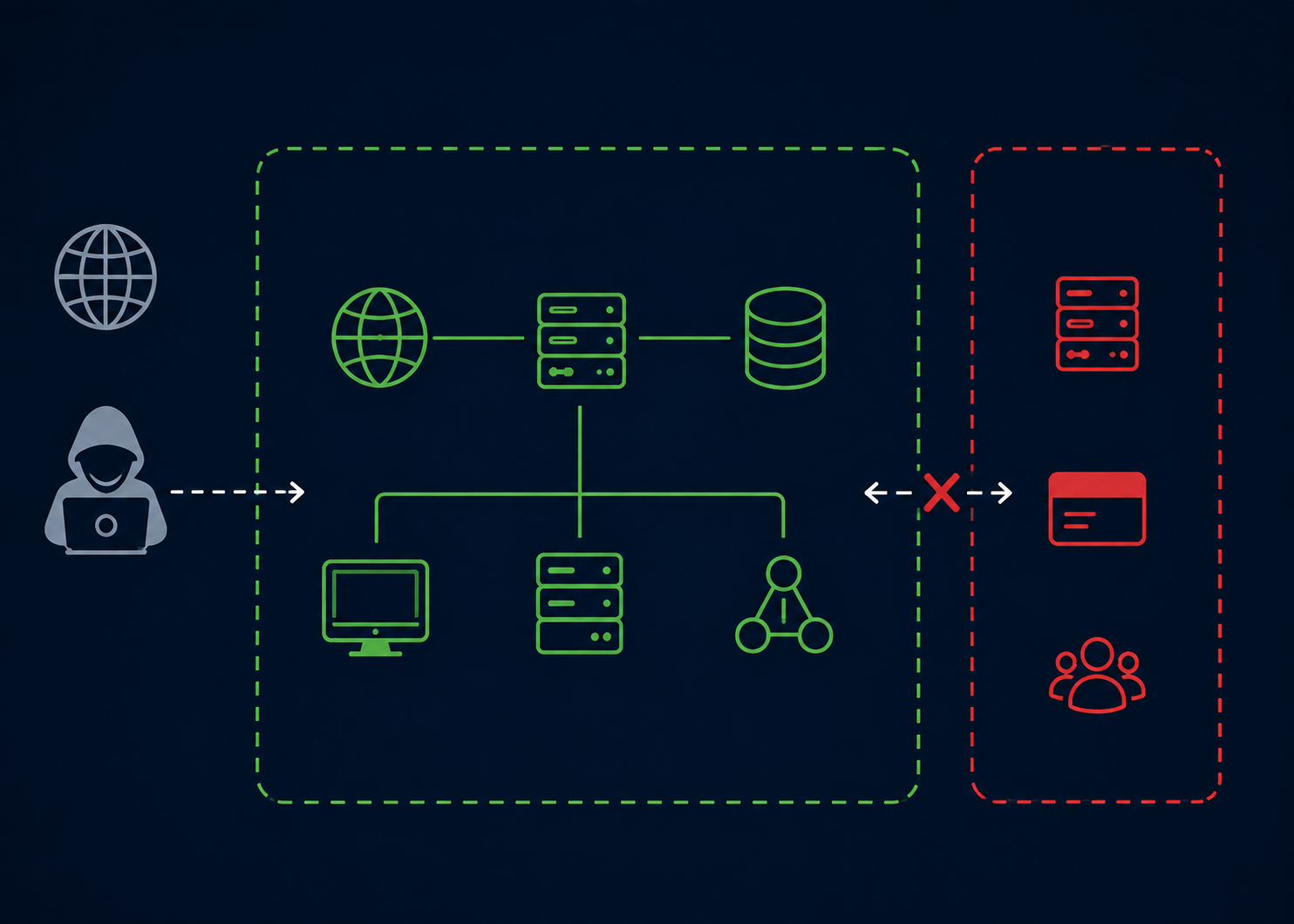
Clinical, administrative, and medical device networks should be separated so that a compromise in one does not propagate to others. However, this control is frequently documented but inconsistently implemented. Ransomware that reaches an administrative workstation should not have an open path to EHR servers.
Patch Management
For systems and medical devices that are too old or too vulnerable to be patched on regular schedules, a structured patch management program documents compensating controls, establishes escalation paths for emergency patches, and prioritizes known exploited vulnerabilities.
Data Encryption
PHI in transit requires TLS 1.2 or later. PHI at rest requires encryption on servers, workstations, and backup media. Proper key management is just as crucial as implementing encryption, as incorrectly stored keys can bypass encryption during recovery.
Secure Backups
Immutable copies prevent ransomware from encrypting the backup store. Offline copies provide a recovery path if network-connected backups are compromised. Restoring tests is the only way to validate recovery time objectives before an incident forces the question.
Penetration Testing
Controls that appear correct in documentation do not always hold up under real-world attack conditions. Manual pentesting validates whether access controls, segmentation, authentication, and encryption withstand real-world exploitation and surfaces chained attack paths that automated scanners miss.
Healthcare Cybersecurity Controls by Environment
A single web application vulnerability illustrates how gaps chain together. An authentication flaw in a patient portal can allow an attacker to enumerate accounts, escalate to an API returning clinical records, and exfiltrate PHI without triggering any monitoring alerts. This is precisely the kind of exploit path automated scanners typically miss.
Common Implementation Mistakes
Most healthcare cybersecurity failures result from gaps between what policies describe and what systems actually do.
Checkbox Compliance
An organization can have a written MFA policy and still have dozens of admin accounts operating without it. Manual, exploit-driven penetration testing services expose those gaps by attempting to exploit them rather than by reviewing policies that claim they do not exist.
Untested Backups
Backups that have never been restored provide false confidence. A previously recoverable situation becomes critical when, during a ransomware incident, it is discovered that the restoration process will take four times as long as expected or that files are corrupted.
Flat Networks
Without segmentation, organizations are vulnerable to the lateral movement of compromised devices into backup and clinical systems. In the Change Healthcare breach, attackers moved laterally through the network for roughly nine days before deploying ransomware, exactly the kind of extended, undetected movement that segmentation is designed to stop.
Delayed Remediation
Unresolved security vulnerabilities can accumulate into attack paths. A moderate authentication weakness, an unpatched server, and an over-privileged service account together create a vulnerability chain that none of these issues would cause on their own.
Schedule a Healthcare Penetration Test
It goes without saying that documented regulations are necessary. Validated controls are what actually reduce the risk of breaches. Software Secured delivers manual, exploit-driven HIPAA penetration testing services for healthcare organizations that need to know whether their security program can survive against real attack techniques, not just auditor review.
Every engagement includes zero false positives, reproducible evidence, compliance mappings, built-in retesting, and ongoing remediation support through the Software Secured Portal. You can test everything from electronic health record platforms to web apps, APIs, cloud infrastructure, and internal networks in a staging environment that doesn't expose protected health information.
Book a consultation to get a scoping recommendation.
Frequently Asked Questions
What is cybersecurity in healthcare?
Healthcare cybersecurity is the protection of patient data, clinical systems, applications, medical devices, and users from cyber threats. It spans technical controls such as encryption and MFA, governance processes such as risk assessments, and validation activities such as penetration testing.
Why is cybersecurity important in healthcare?
Attacks expose PHI, disrupt care by locking out EHR access, trigger HIPAA penalties, and cause downtime that can take weeks to recover from. The financial and clinical consequences are more severe in healthcare than in most other industries.
What are common healthcare cyberattacks?
Ransomware enters through phishing or exposed remote access. Credential theft targets EHR platforms and cloud accounts. Web application attacks exploit authentication flaws in patient portals. Vendor compromise exposes PHI through third-party access. A consistent share of healthcare breaches is caused by insider misuse.
How often should healthcare organizations perform penetration testing?
HIPAA doesn't specify a fixed testing frequency, but annual penetration testing is recommended after any major changes to applications, infrastructure, cloud environments, or vendor integrations. It is widely regarded as the baseline practice for meeting the Security Rule's risk analysis requirements. PTaaS models allow testing to align with release cycles rather than fixed annual schedules.
Do HIPAA requirements guarantee strong cybersecurity?
No. HIPAA establishes a compliance baseline, but documentation does not prove that controls function correctly. Despite auditor satisfaction, organizations may still have vulnerable configurations or gaps in access control. Penetration testing helps ensure that documented compliance translates into measurable security.
Ready to get in touch? Get started by booking a consultation now.
About the author

Kaycie Waldman
Demand Generation Manager
Kaycie Waldman works closely with SaaS, cloud, and technology organizations on security, risk, and compliance initiatives that support growth and enterprise readiness. Her work spans strategic content, go-to-market initiatives, and customer trust programs designed to support scale, compliance, and enterprise sales.

.avif)